
Gravity and the SpaceX IPO
What SpaceX’s fall back to Earth teaches us about investment risk
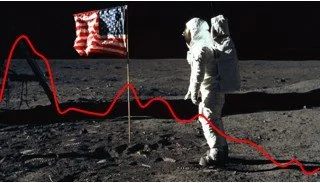
Rockets are designed to defy gravity. Investments are not.
When SpaceX entered the public market in June, it was one of the most anticipated IPOs in history. The company priced its shares at $135 and raised approximately $85.7 billion. Within days, the stock soared as high as $225.64.
For a moment, it appeared there was no limit to how high it could go.
Then gravity returned.
By July 23, SpaceX shares had fallen to approximately $115—below their original IPO price, more than 30% below their record closing level and nearly 50% below their post-IPO high. Short sellers were reportedly sitting on billions of dollars in paper profits.
SpaceX did not suddenly stop launching rockets. Starlink did not disappear. The company’s long-term ambitions did not become less extraordinary overnight.
What changed was the price investors were willing to pay for those ambitions.
And that distinction matters.
A great company is not always a great investment
SpaceX may be one of the most innovative companies of our time. It has transformed commercial space travel, created a global satellite network and pursued projects that once belonged exclusively to science fiction.
But investing is not simply about identifying companies that may change the world. It is about deciding how much of that future is already reflected in the price.
At its post-IPO high, investors were not merely paying for the SpaceX of today. They were paying for successful rocket launches, continued Starlink growth, future artificial-intelligence infrastructure—and years of ambitious plans unfolding largely as promised.
The higher the price, the less room there is for disappointment.
That does not mean SpaceX cannot ultimately justify its valuation. It means that even an exceptional business can become a risky investment when expectations rise faster than fundamentals.
This is one of the most important distinctions in investing:
A company can change the world and still disappoint an investor who pays the wrong price.
Excitement is not the same as conviction
IPOs are particularly good at creating urgency.
A new stock arrives with a compelling story. The financial media provides constant coverage. Early buyers appear to make money almost immediately. Scarcity adds to the excitement, and investors begin to worry that waiting will mean missing the opportunity entirely.
This is FOMO dressed up as an investment thesis.
When SpaceX climbed from $135 to more than $225, buying the stock probably felt less risky with every dollar it rose. Rising prices create confidence. They make uncertainty feel as though it has disappeared.
But the risk was not disappearing. The price was increasing.
Real conviction is not demonstrated by buying something because everyone else wants it. It is demonstrated by understanding what you own, why you own it, what could go wrong and how much you can afford to lose if it does.
Your risk tolerance is measured on the way down
In Episode 4 of The Edit, I discuss the difference between risk tolerance and risk capacity.
Risk tolerance is emotional. It describes how much uncertainty and volatility you believe you can handle.
Risk capacity is financial. It describes how much loss your actual circumstances allow you to absorb without jeopardizing your goals.
Investors often discover the difference only after a stock falls.
Imagine that you invested $50,000 in SpaceX near its post-IPO high. At approximately $115 per share, that investment would now be worth roughly $25,500.
Would you remain confident?
Would you buy more?
Would you feel compelled to sell?
And most importantly, would losing nearly half the investment interfere with your retirement, your child’s tuition, the purchase of a home or another goal?
A percentage decline can feel abstract. A dollar loss is personal.
That is why risk should be considered before an investment is made—not after the market makes the decision uncomfortable.
Position size is a form of risk management
You do not have to predict the future perfectly to invest successfully. You do need to survive being wrong.
That is where position sizing matters.
An investment can be speculative without threatening your financial plan if it represents a modest portion of a diversified portfolio. The same investment can become dangerous when enthusiasm turns it into an oversized bet.
Before buying an IPO—or any investment driven by an exciting story—ask yourself:
How much of my portfolio would this represent?
What would happen if the price fell by 25%?
What about 50%?
How long can I leave this money invested?
Am I buying because I understand the opportunity or because I am afraid of missing it?
What assumptions must prove true for today’s valuation to make sense?
These questions will not eliminate risk. That is not the goal.
The goal is to understand the risk you are accepting and make certain it fits within your broader financial plan.
The lesson is not “don’t buy SpaceX”
This is not an argument for or against SpaceX. Its stock could recover. The company could execute brilliantly and continue transforming several industries. It could also face delays, higher costs, increased competition or a broader reassessment of the price investors are willing to pay for distant growth.
No one knows with certainty.
That uncertainty is precisely the point.
The SpaceX selloff is a useful reminder that innovation does not repeal the laws of investing. Valuation matters. Diversification matters. Time horizon matters. Investor behavior matters.
Most of all, price matters.
As I say in Episode 4:
Risk isn’t the enemy. It’s the price of admission.
But before purchasing the ticket, investors should understand exactly what price they are paying—and whether they can remain in their seats when the ride suddenly changes direction.
Rockets may be able to escape Earth’s gravitational pull.
Investments eventually have to answer to it.
This material is provided for educational purposes only and does not constitute investment advice or a recommendation to buy or sell any security. All investing involves risk, including the possible loss of principal.
